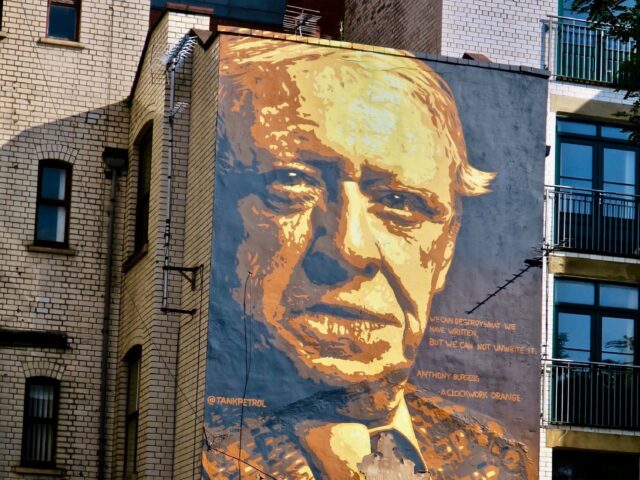
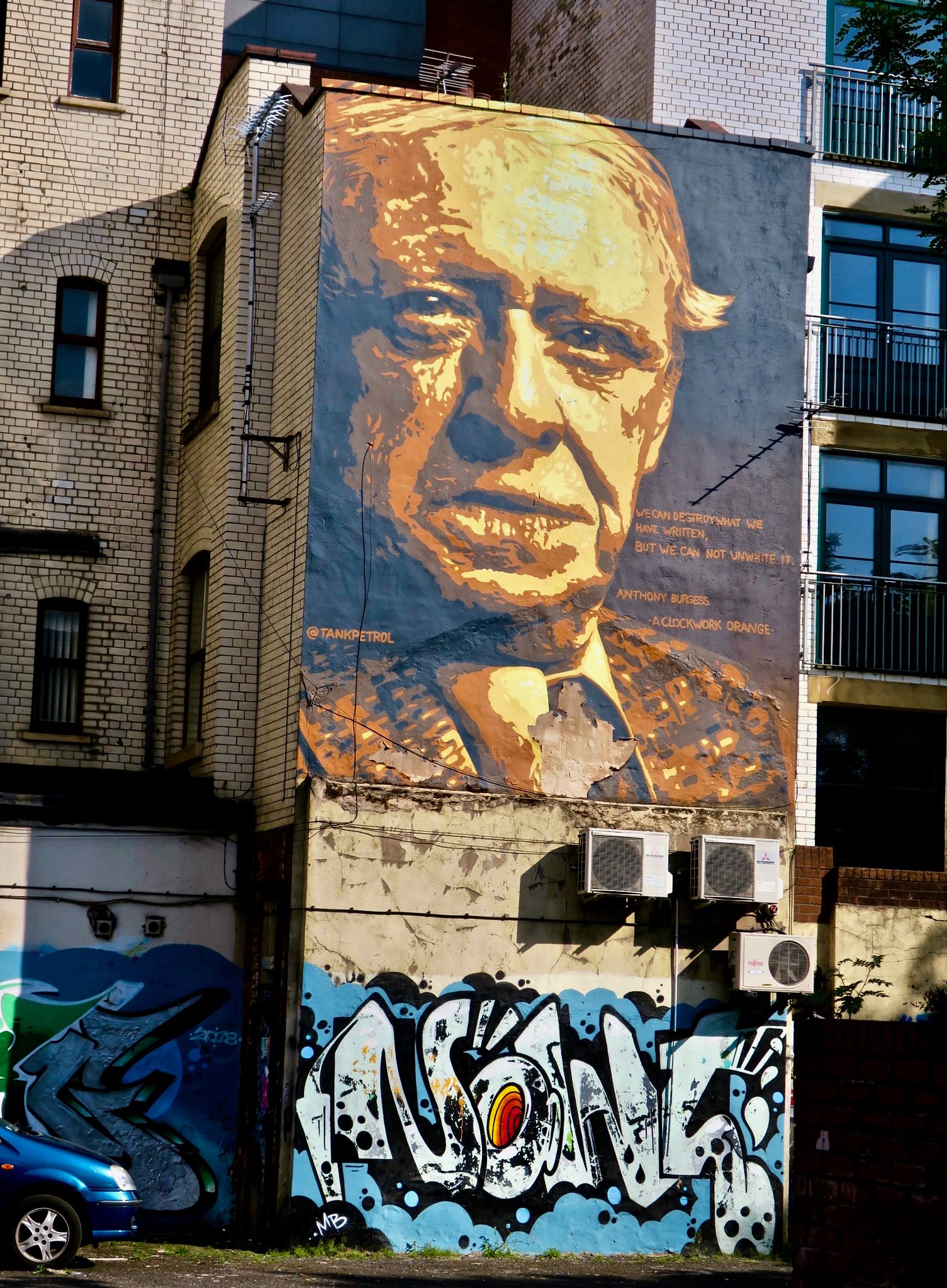
This dramatic portrait of Manchester-born writer Anthony Burgess sits high on the northern wall of 19 Brightwell Walk, near the city’s Craft and Design Centre. It features a line from A Clockwork Orange, a brutal story of urban violence inspired by tragic events in Burgess’ life. But there’s far more to this talented Mancunian than his infamous book…
Artefact
Anthony Burgess mural
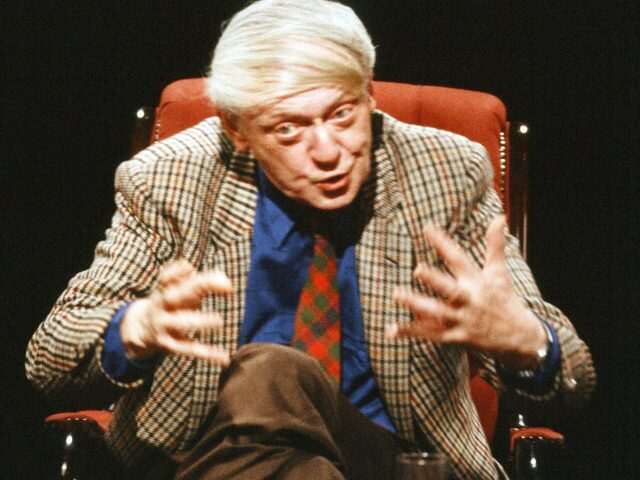
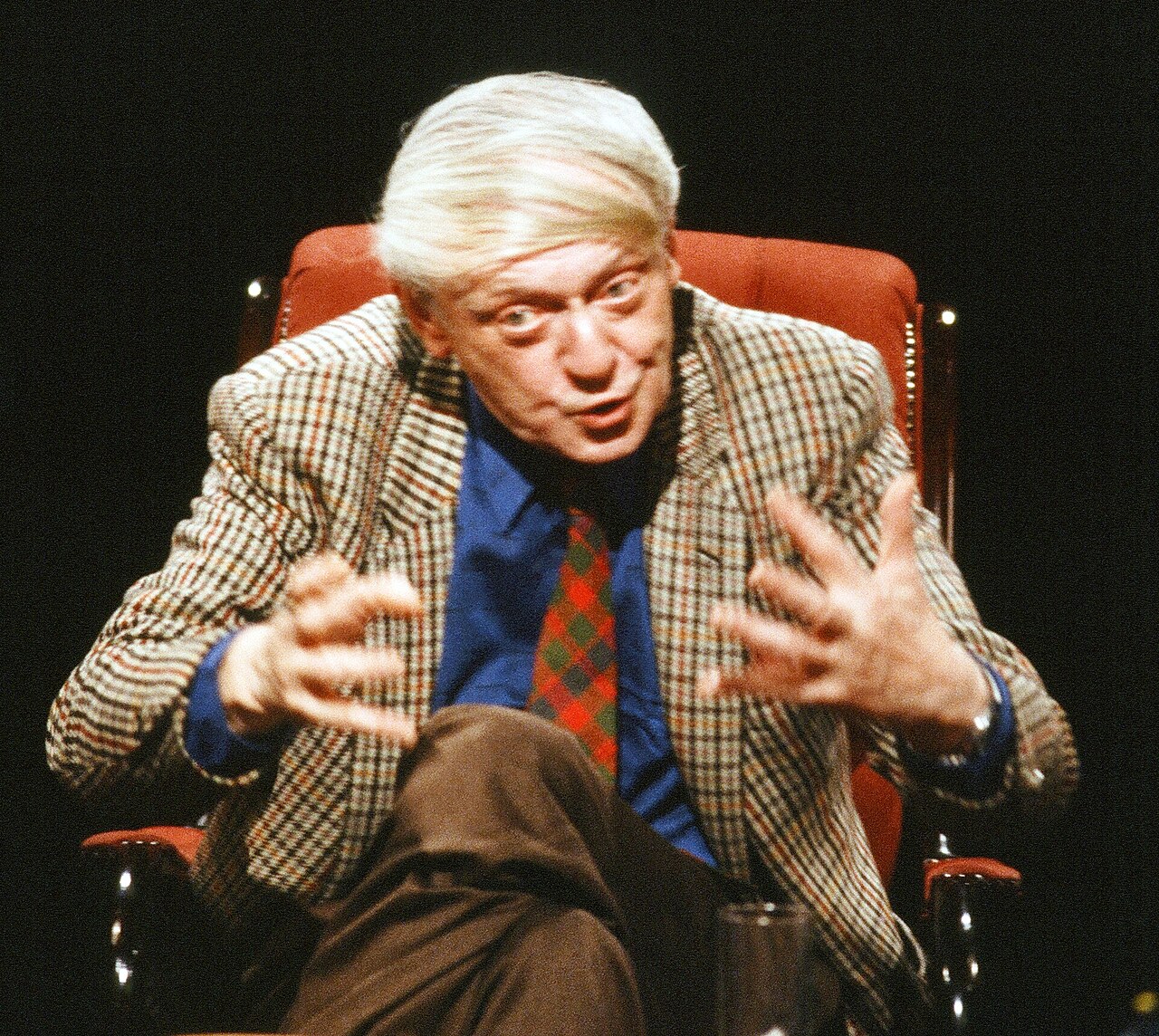
Burgess was born John Anthony Burgess Wilson in Harpurhey in 1917. His father played piano in Manchester cinemas and music halls, and Burgess first hoped to become a composer. He did poorly in a physics examination, then considered essential for understanding acoustics, so he studied English at the University of Manchester instead. He wrote music for student theatre and was influenced by radical director Joan Littlewood, who encouraged his lifelong support for freedom of expression. Although writing and teaching paid his bills, he continued composing, including a ballet about Shakespeare.
Tankpetrol painted Burgess as an older man in the tweed jacket he used to create his public “writer” image. Beside him is the line “we can destroy what we have written but we cannot unwrite it.” It comes from A Clockwork Orange, a brutal story shaped by a traumatic event. While Burgess served in the Second World War, American deserters attacked his pregnant wife. She lost the baby, later developed alcoholism and eventually died from liver disease.
The novel gave Burgess a reputation for dark dystopian fiction, but many of his roughly 30 other books are comic. Some appeared under the name Joseph Kell. He believed he wrote better in hot weather and moved first to Sussex, then eventually to Monaco with his second wife Liliana. When he returned to Manchester in 1987, he was shocked to see childhood streets “falling to pieces” and full of “decay”. He described growing up among ‘hard drinking, hard fighting and ugliness’, and said reading and learning languages had offered an escape.
Tankpetrol was born in Poland in 1982 and is now based in Manchester. He has become known internationally for large, striking portraits, with work across the city including Stevenson Square. Burgess, a lifelong smoker, died from lung cancer in 1993. His extensive archive is cared for by the International Anthony Burgess Foundation on Cambridge Street. Members of the public can arrange a visit, while parts of the collection can also be explored online.
A lifelong smoker, Burgess died of lung cancer in 1993, leaving behind an extraordinary archive which is now cared for in Manchester by the International Anthony Burgess Foundation, on Cambridge Street. Anyone can go and explore it, although you do need an appointment to visit. Find out how to make one here. Alternatively, you can explore some of the archive from the comfort of home – this page is a really good place to start.
– Anthony Burgess recalling the Manchester streets of his childhood“Although this was working class, poor, it was respectable. They tried to keep things clean. There was no sense of decay.”
Read about the musical exploits of Anthony Burgess at the Anthony Burgess Foundation where you can also listen to this podcast about his life and works. Alternatively, watch this video compilation of Burgess reacting to Manchester when he returned in 1987.
Which of Manchester’s other famous faces had hidden talents? Keep exploring This Is Us to find out, or get in touch to share what you know!
Related
Artefact
•Piccadilly
Ducie Street Doodle
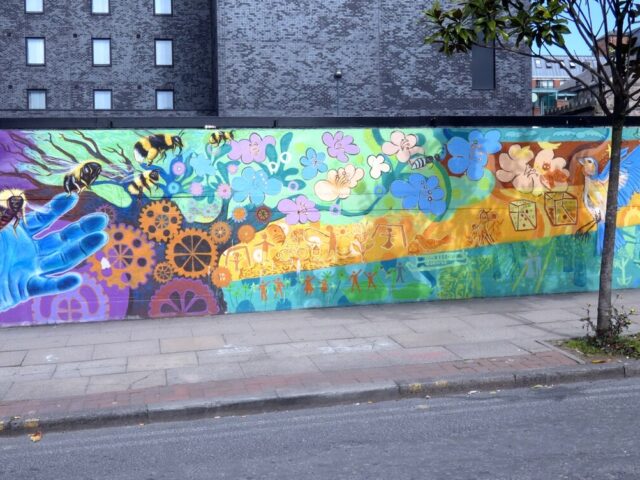
Read about the Ducie Street mural created by Mancunians who experienced homelessness through a collaboration with Manchester charity Mustard Tree.
Read more
Artefact
Artefact
•Ancoats
Bradford Pit Memorial
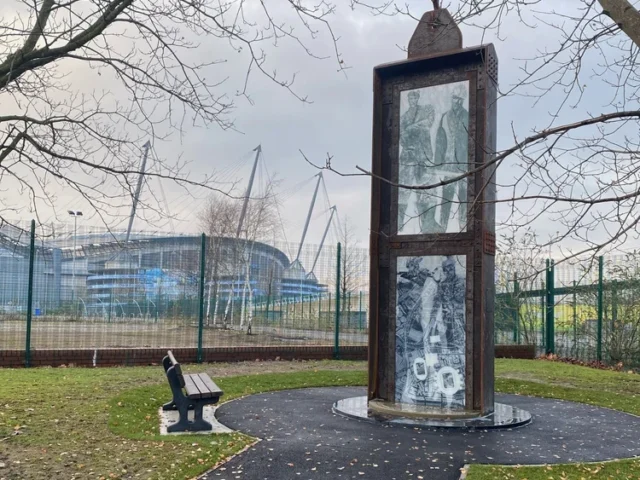
Learn about the Bradford Pit Memorial at the Etihad Stadium, honouring the miners and working-class history beneath Manchester’s famous football ground.
Read more
Artefact