To mark the millennium, artist Andrew McKeown made twenty-one copies of the same sculpture, named “Breaking the Mould”. They were installed across England and Wales, marking sites where derelict industrial land had been transformed into public parks. Although they all emerged from the same mould, each sculpture developed its own local flavour…especially in Manchester.
Artefact
Breaking the Mould
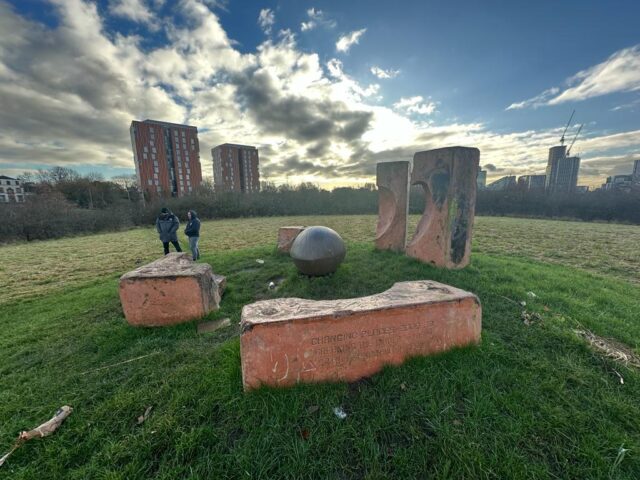
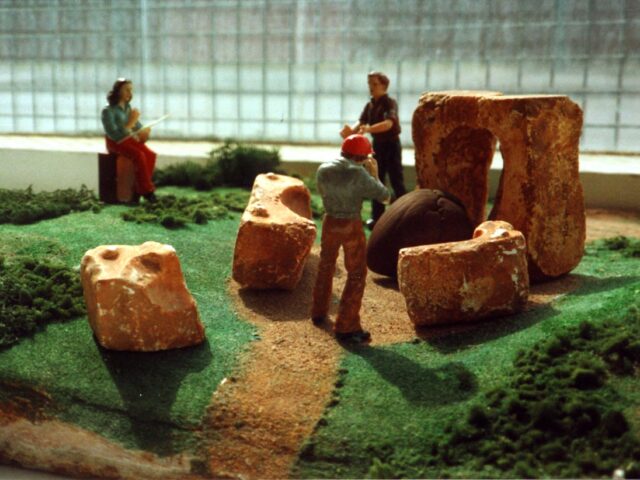
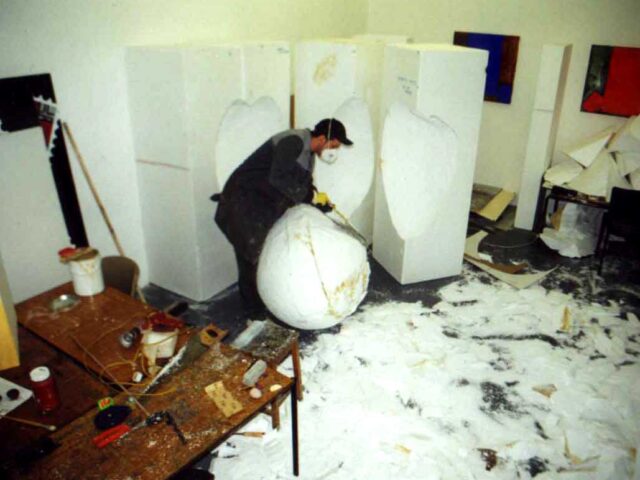
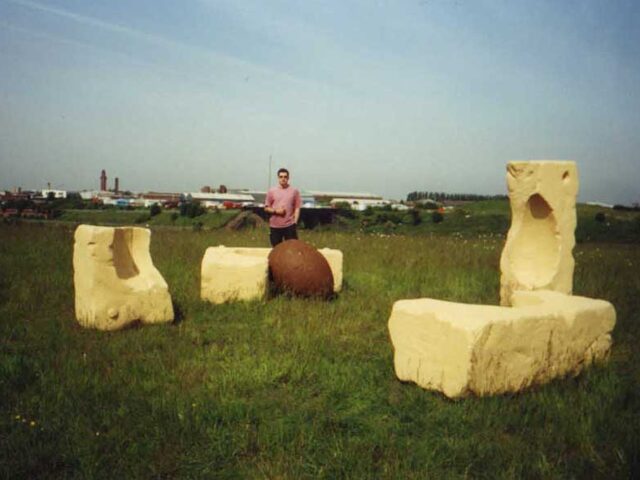
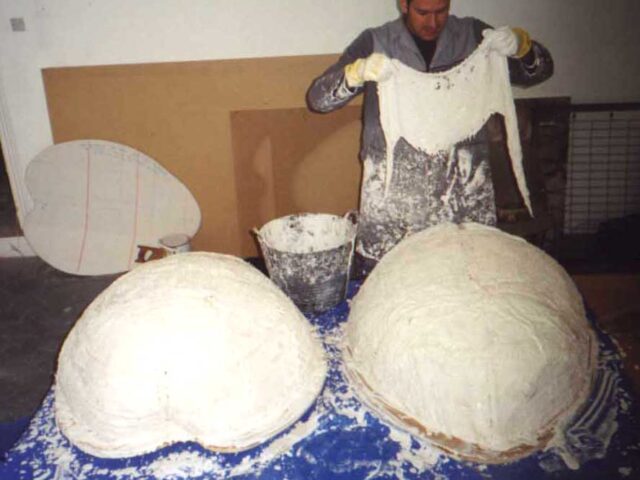
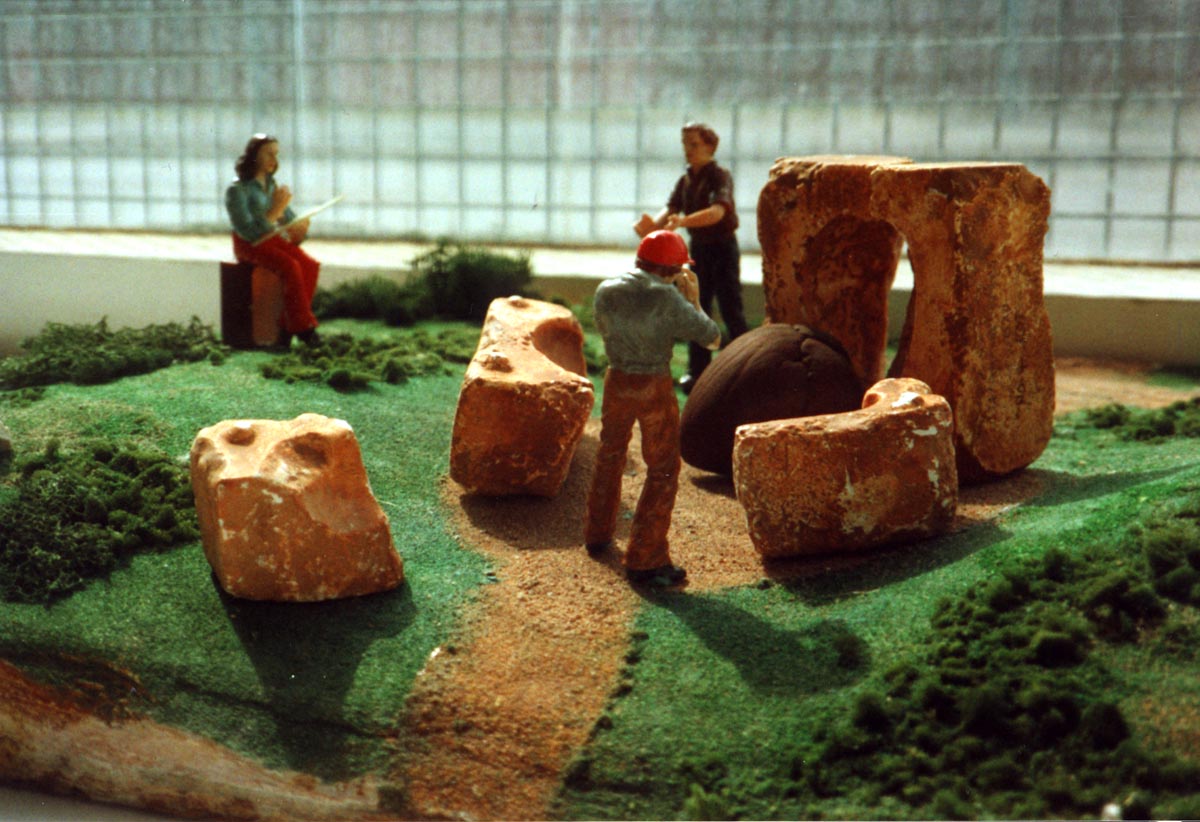
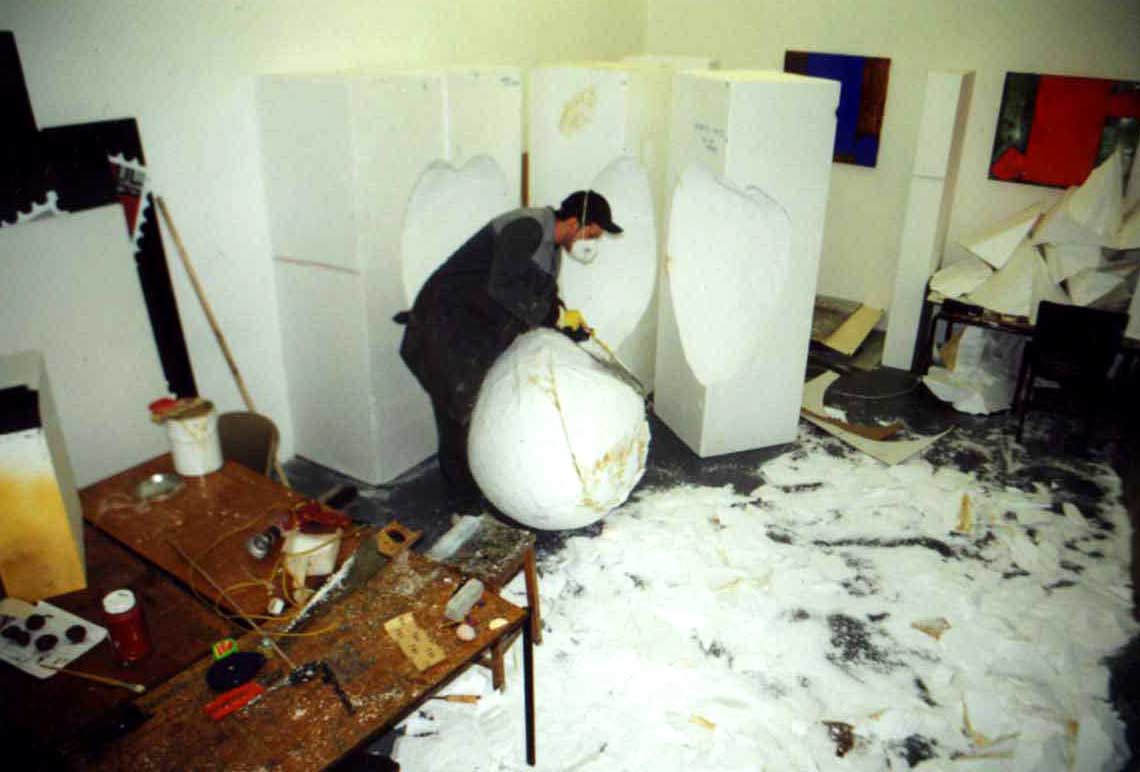
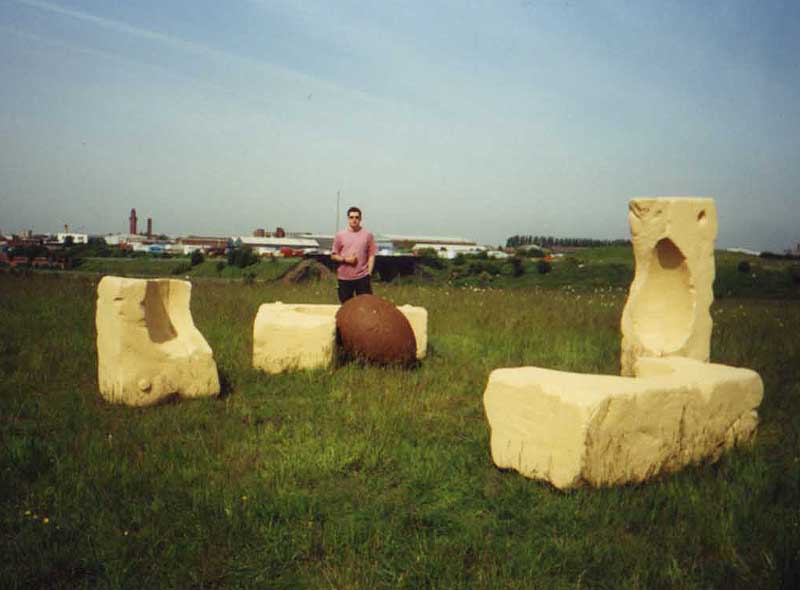
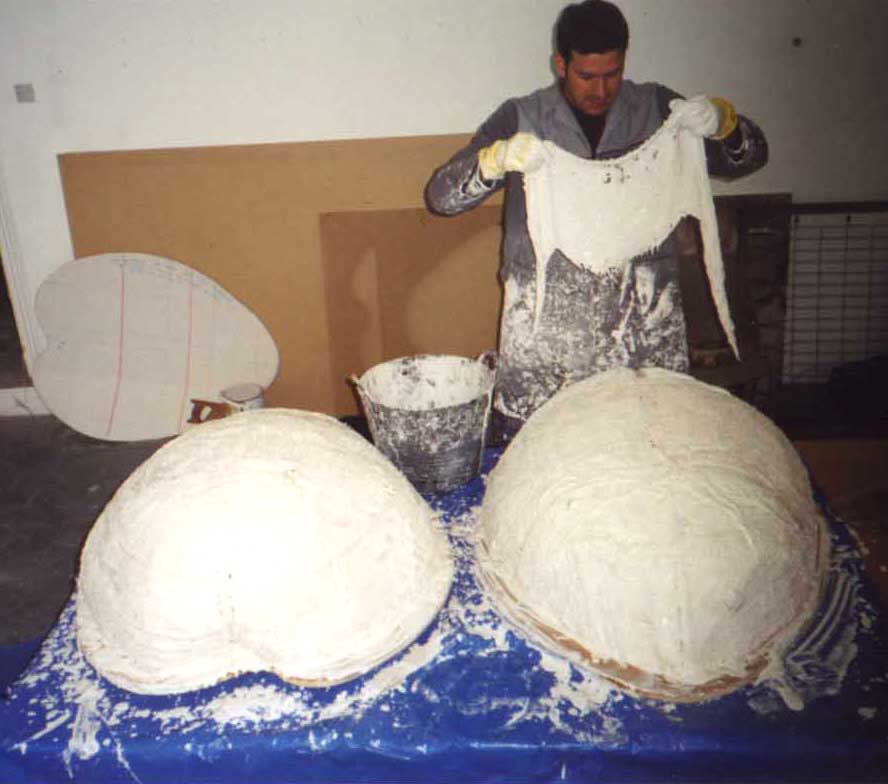
Each artwork shows a huge cast-iron seed resting among the broken pieces of a stone mould. The seed represents new life, while the shattered mould stands for industrial decline. The sculptures marked 21 places transformed through the £60 million “Changing Places” programme. Polluted and abandoned industrial sites were cleaned and remade as parks and wildlife habitats. Examples can be found from Plymouth to northern England, although most are in the north.
Andrew developed the idea with local groups. At a knitting group for older women in north Manchester, he asked what members thought about the industrial monuments then in fashion. They said they had heard enough about coal mining and wanted people to turn over a new leaf, break the mould and look towards a greener future. Andrew tried using onion shapes before discovering that an avocado stone gave him the organic but solid form he needed inside an industrial mould.
He made a full-size polystyrene model and toured the country, working with communities to decide how the pieces should be arranged. The sculptures were cast from the same design, but none is quite identical. Manchester’s has a reddish surface inspired by the area’s red sandstone. Many stand in out-of-the-way, traditionally working-class neighbourhoods where a visitor may not expect to meet a monumental artwork.
The version in Collyhurst’s Sandhills Park has developed a particularly Mancunian afterlife. On Google Maps it became “Peachstone Henge (aka Egghenge)”, and markings added to its surface give it the look of a prehistoric monument. Visitors debate whether its centre is a peach stone or an egg, while almost nobody recognises the avocado. The park itself was once Collyhurst Quarry, source of sandstone used in Manchester Cathedral. A smaller, informal relative of the sculpture can be found at Victoria Mills Park in Miles Platting.
Groundwork UK, a federation of charities working to improve public spaces, commissioned and installed the project. Funding came from the Millennium Commission, which used £2 billion of National Lottery money to celebrate the year 2000. Its projects ranged from “Breaking the Mould” to the Millennium Seed Bank, where seeds are protected in case plants disappear in the future.
Find out where to see more Breaking the Moulds on Andrew McKeown’s website, or track down other secret landmarks in Manchester via this handy guide. Alternatively, get serious with a delve into the records of the Millennium Commission at the National Archives, or learn how Collyhurst Quarry defined Manchester’s most magnificent architecture. Finally, sit back and enjoy the Collyhurst sculpture’s star turn in popular BBC TV series Waterloo Road…it appears at the end of Ep8 S14.
Where else are Mancunians making the most of a hidden heritage site? Keep exploring This Is Us to find out, or get in touch to contribute more stories!
Related
Artefact
•Piccadilly
Ducie Street Doodle
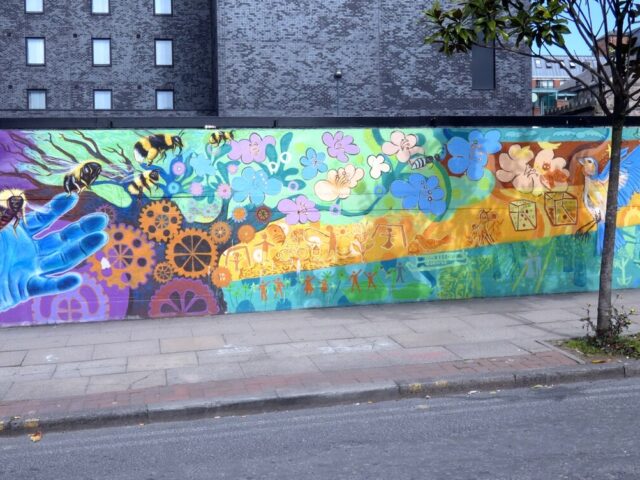
Read about the Ducie Street mural created by Mancunians who experienced homelessness through a collaboration with Manchester charity Mustard Tree.
Read more
Artefact