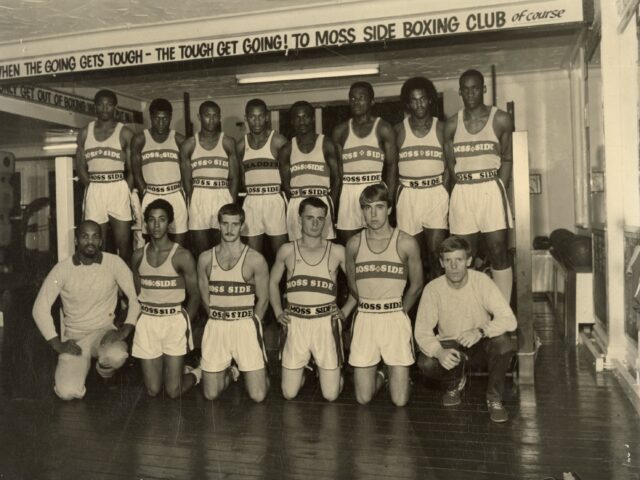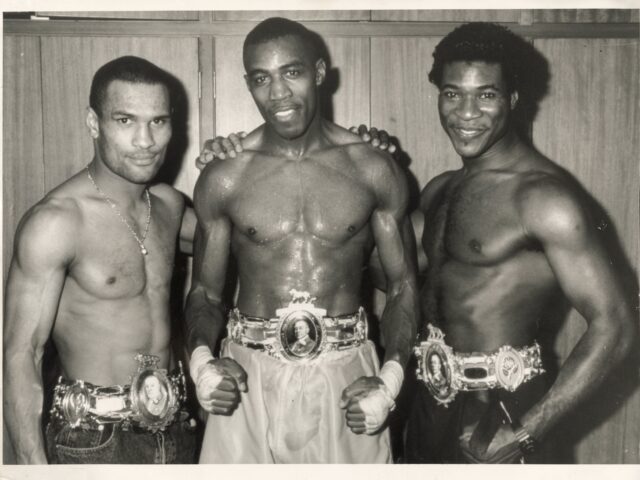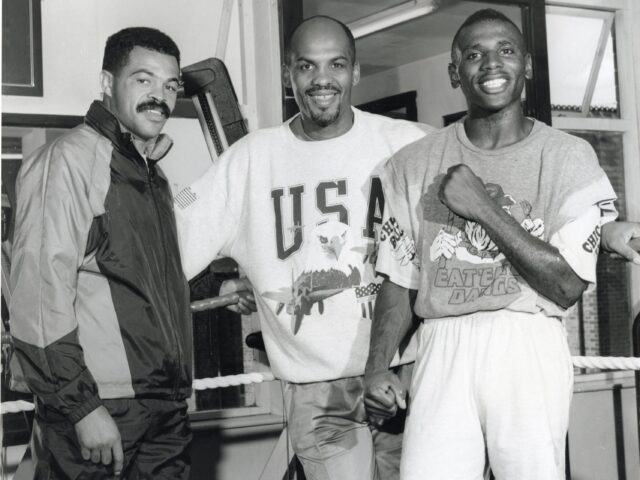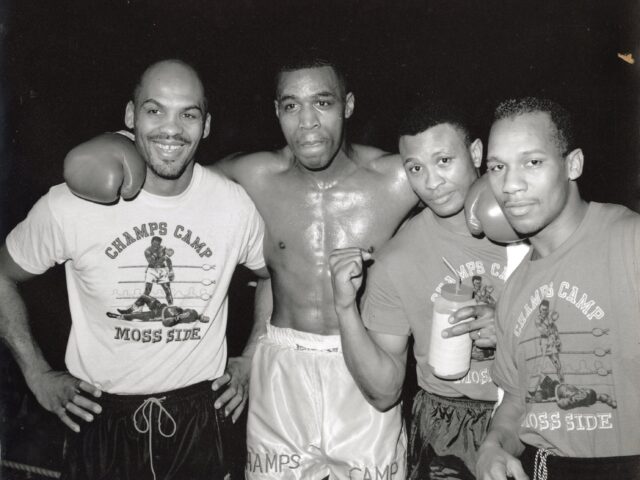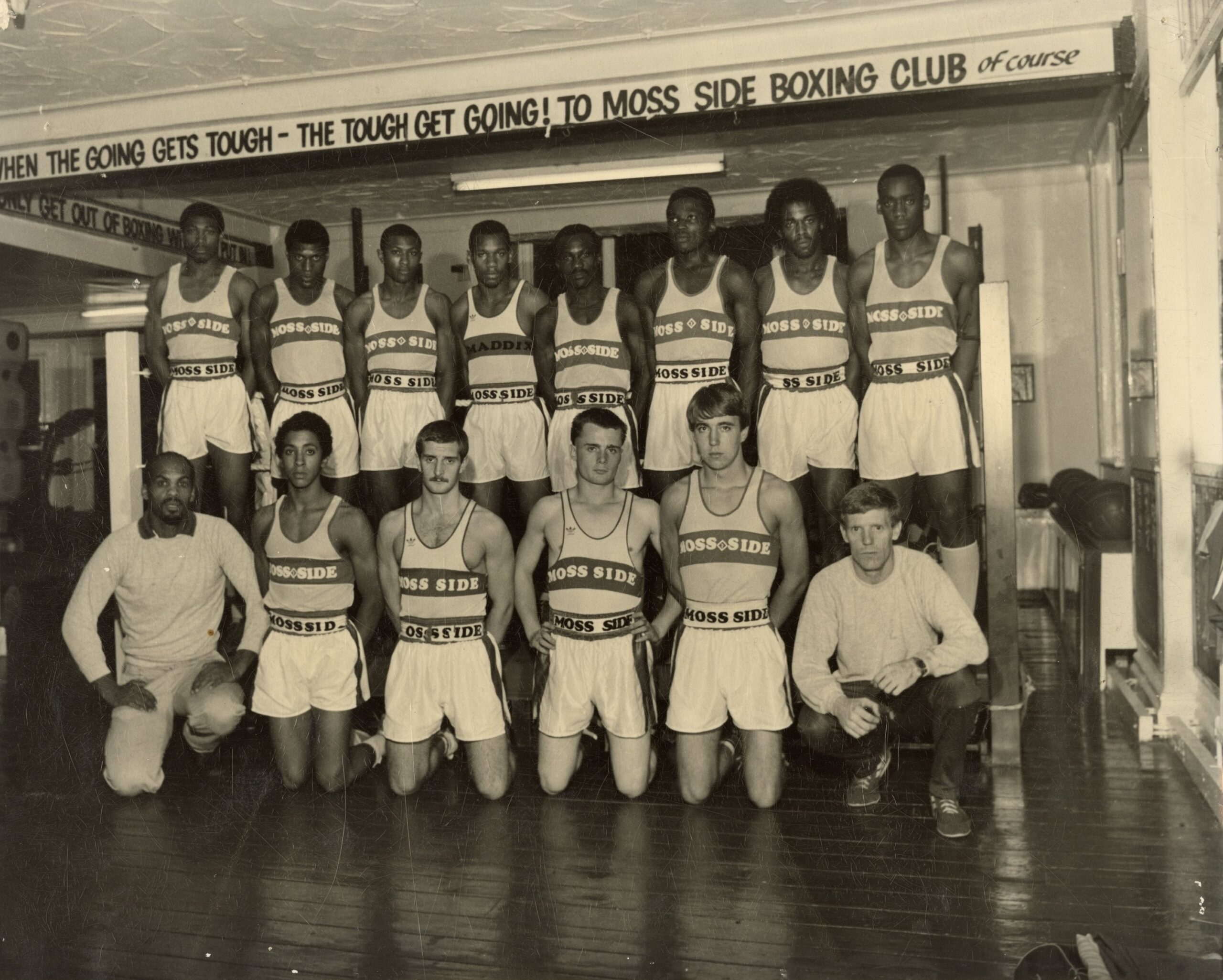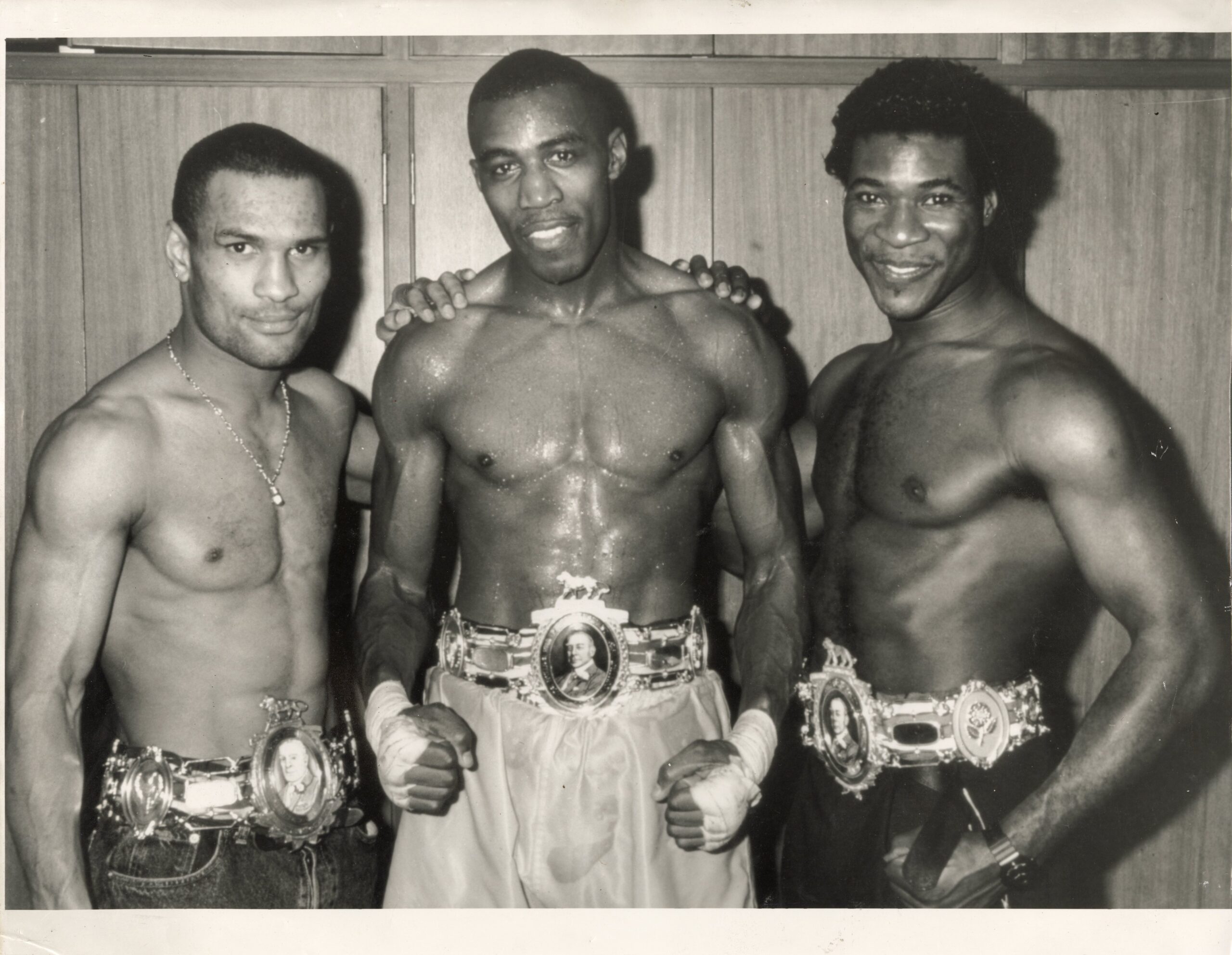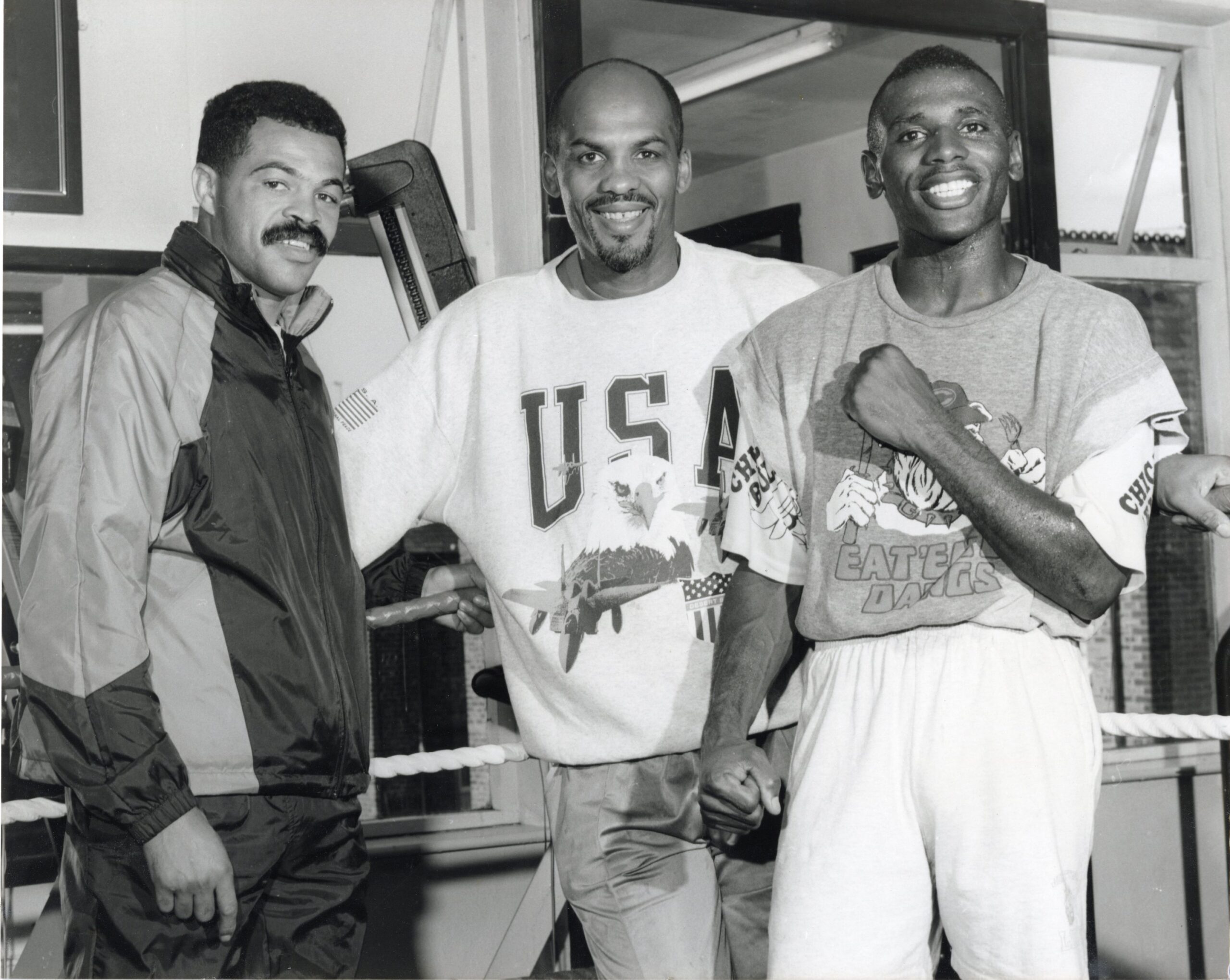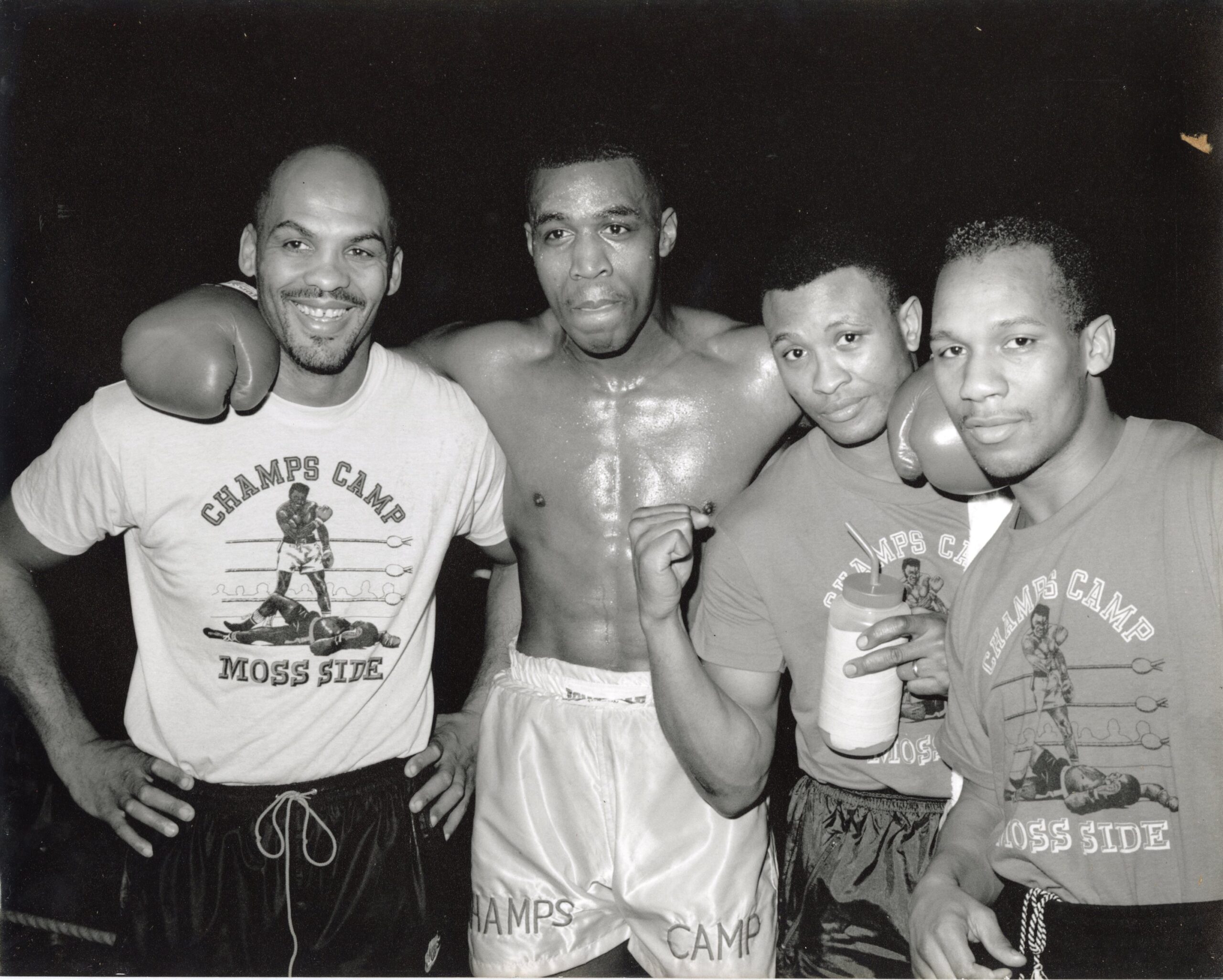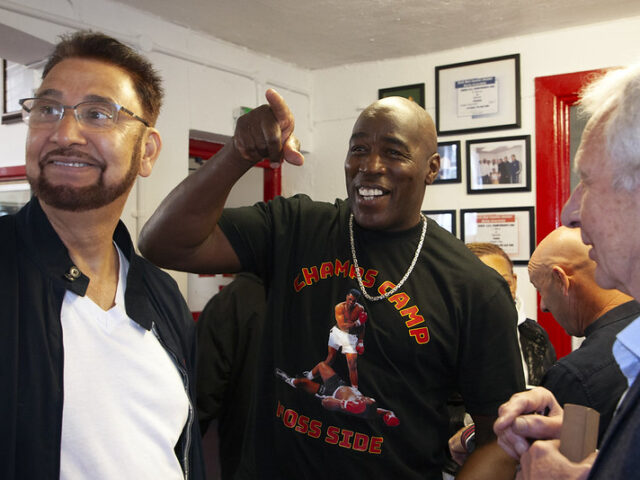
Champs Camp boxing gym was founded by Phil Martin (aka Philip Martin Adelagan) in the early 1980s after a period of serious social unrest in Moss Side. Martin guided numerous boxers, including Tony Ekubia, Frank Grant, Maurice Coore, Ossie Maddix, Ensley Bingham and Steve Walker, to British European and Commonwealth title contests here, acting as both trainer and promoter. By the early 1990s, Phil had four British professional champions on this books and Champs Camp was one of the most successful boxing gyms in Britain. Champs Camp broke the mould of UK boxing as the first successful black led boxing gym in Britain, with Martin, the country’s first black boxing manager and promoter. The journalist, sports pundit and historian of boxing Steve Bunce says ‘Phil Martin was the first major black promoter. Fighter, trainer, manager and promotor. Nobody like him since and nobody before him’.
Martin was born in Moss Side in 1950 to an Irish mother and Nigerian father. He was a professional light-heavyweight boxer during the 1970s before becoming a boxing trainer and promoter. He founded Champ’s Camp in a disused building above what had been the Co-op supermarket on Princess Road. He did this without any public sector support or finance, except for the assistance of the Co-op, which let him use their derelict premises. The building was renovated and turned into a working gym with the help of individuals from the local community, including many of the young people who went on to train there.
Martin encouraged all those he worked with to develop self-discipline, respect others and work hard. Another key factor in Phil’s training was an emphasis on physical fitness. He believed that if you were fitter than your opponent, you stood a better chance of winning and studied exercise physiology and personal training to develop different boxing strategies for each individual. Many of his training techniques were pioneering when he introduced them and are still in use today, including the bar-bag method.
Despite a level of success that meant Manchester became a recognised national centre for boxing, Champs Camp was largely ignored by the UK sporting media and shunned by national sports organisations who tended to view Black leadership in boxing with scepticism and derision during the 1980s and 90s. Champs Camp’s fighters were also blocked from lucrative televised fights. Throughout this period Martin stubbornly and successfully battled long-established racism in boxing by staging and promoting fights with fighters from his own stable on the bill. Driven in part by his life-long left-wing political convictions, he also publicly challenged the long-standing association of Moss Side with guns and gangs.
Throughout his career, Martin nurtured amateur and youth boxers in addition to professional fighters. He devoted much of his time to training and mentoring young people in both boxing and life skills, and ran a successful scheme for unemployed people to become qualified sports coaches. Champs Camp provided a refuge for young people fleeing gang violence and urban neglect for over three decades. This is an important part of Phil Martin’s legacy and a model that former Champs Camp boxers continue to follow at clubs across Manchester, Oldham, Salford, London and Liverpool.
Phil Martin tragically died of cancer at the age of 44 in 1994, but the gym he founded is still going strong.