Now the centrepiece of Stevenson Square, Outhouse began as a collaborative art project which transformed a public loo into Manchester’s most dynamic mural site. For eleven years, it was a top place for the global public art community to exhibit work, and won recognition from media titans such as Time Magazine.
Artefact
Stevenson Square mural site
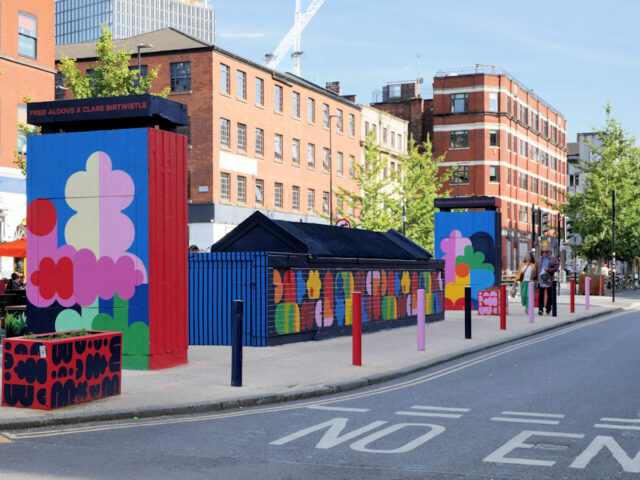
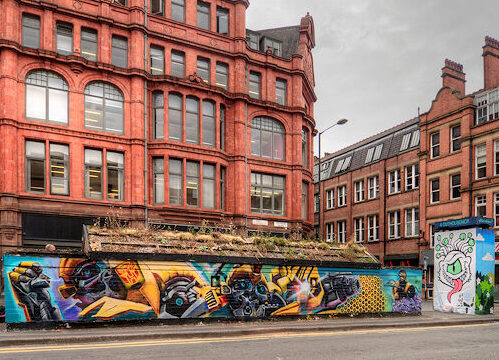
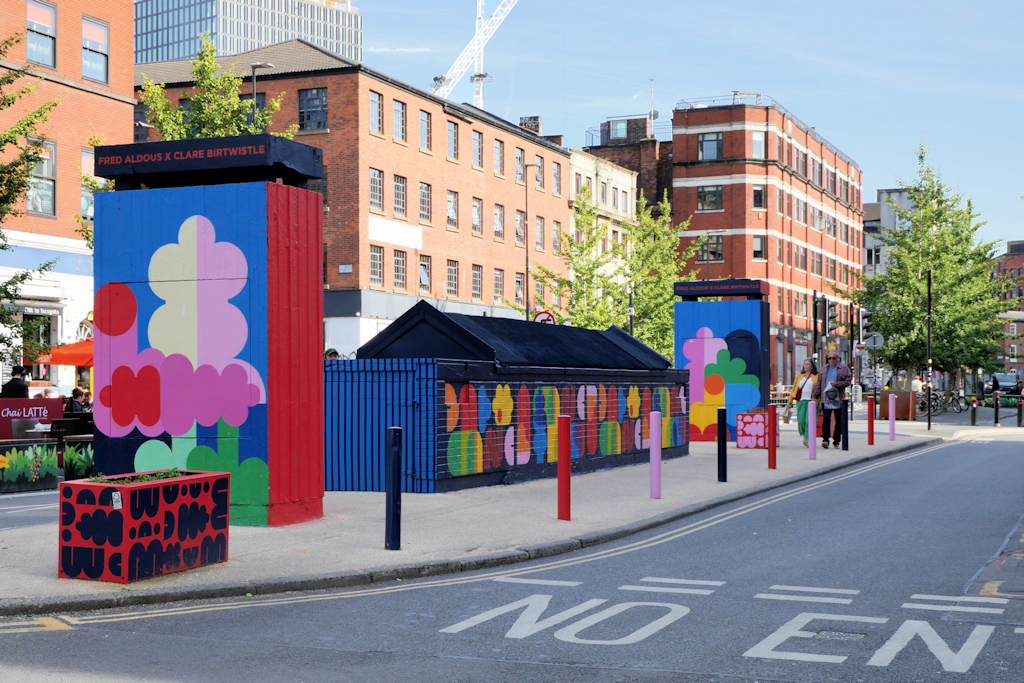
Artist Tasha Whittle started Outhouse after asking four muralists to paint the screens around the disused toilet. Lois McDonald, an artist at the nearby Fred Aldous art shop, encouraged the idea, and the shop supplied materials. Tasha’s plan was simple: four artists would create new work every three months. The first group quickly showed that the small site could become a widely noticed place for experimentation.
At first, Tasha gave no brief. Artists could express themselves freely and test ideas outside their usual practice. Some were already muralists, while others, including miniaturist Paul Hallows and painter Caroline Dowsett, tried working at a new scale. Graffiti artists added wordplay alongside painted images. Each group worked together over a weekend without payment, turning the site into an open gallery. It became a regular stop for artists passing through Manchester, and several people gained paid work after being seen there.
After a few years, Tasha began giving each group a theme, which created new links between the four walls. The project also expanded to the Substation on Tib Street, later known for Akse’s portrait of Covid fundraiser Captain Tom Moore. Artists continued to use the sites for creative and political expression, carrying on Stevenson Square’s much older role as a place for public debate.
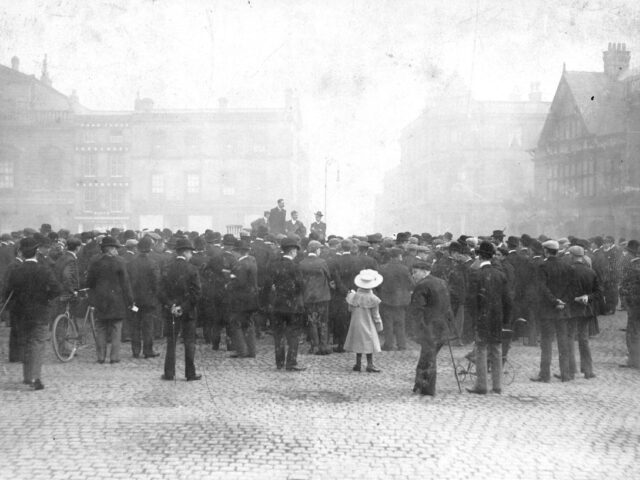
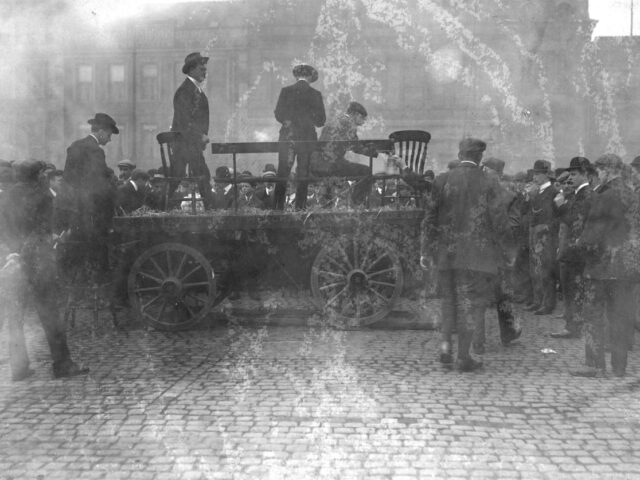
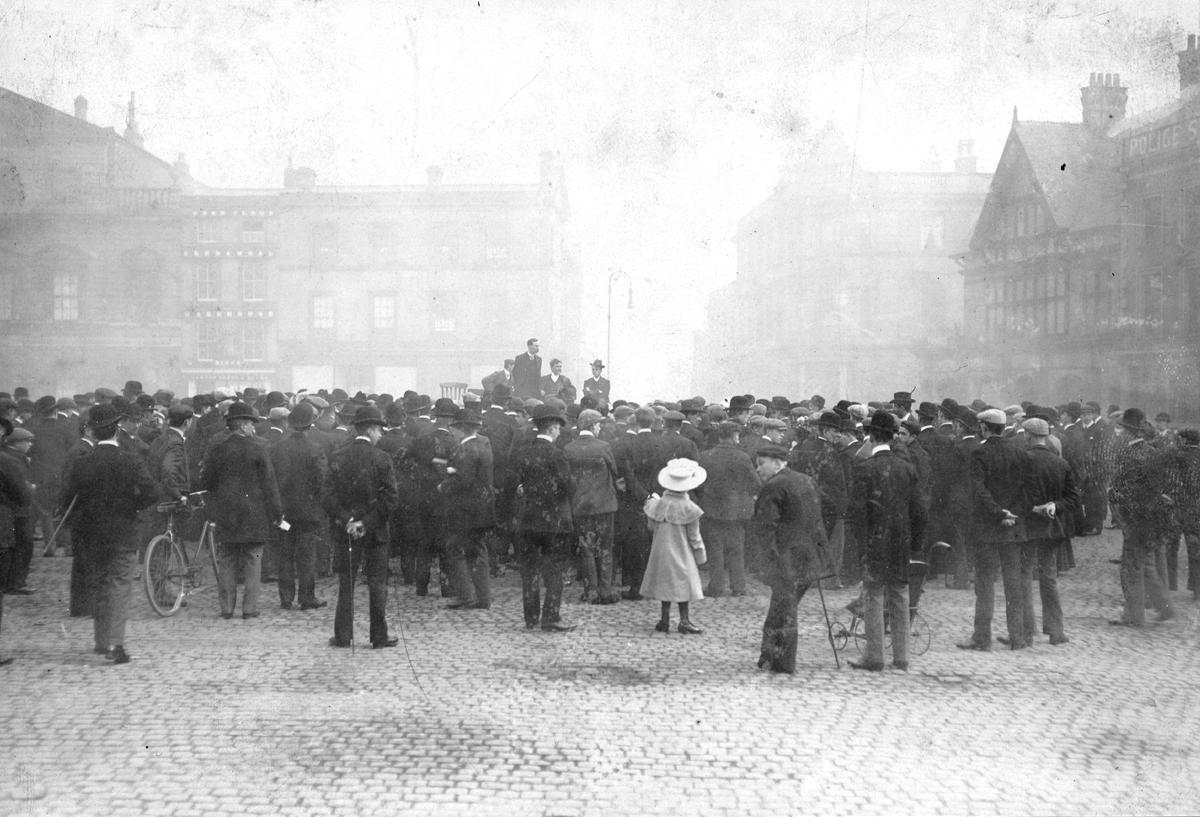
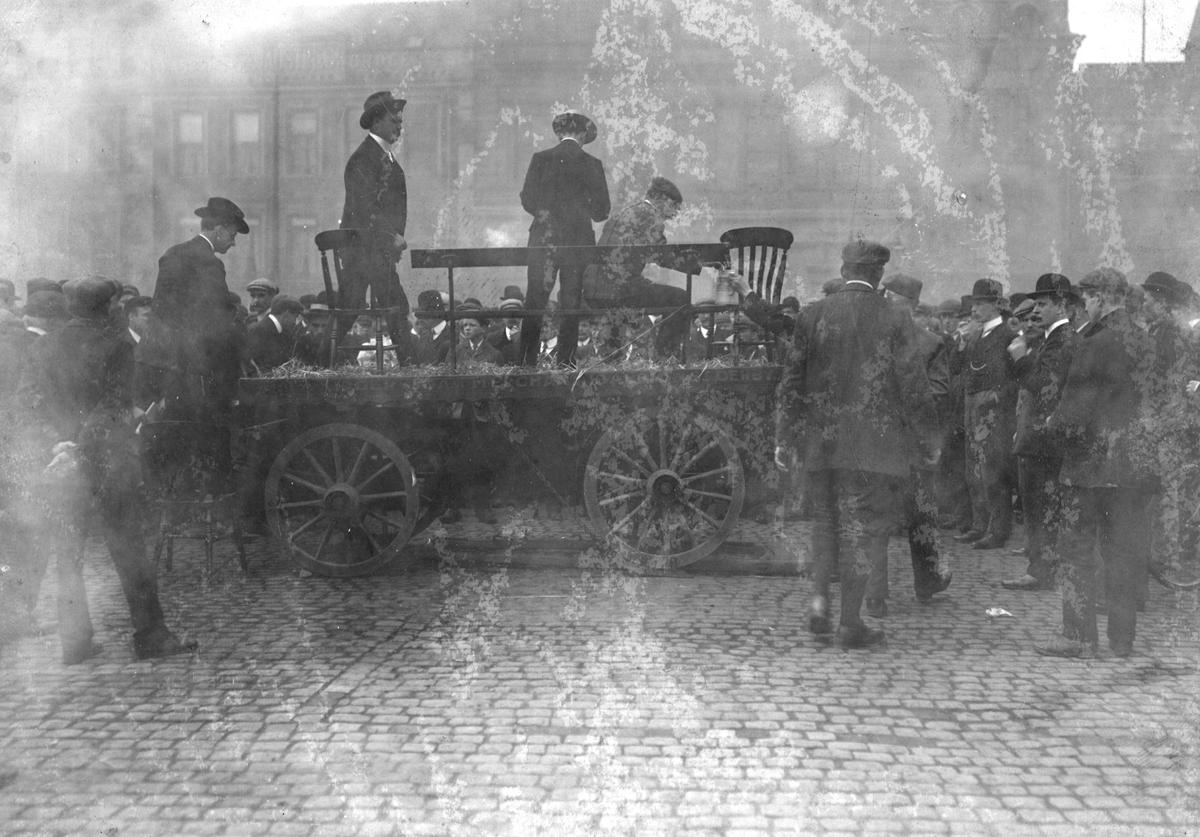
That history was not always peaceful. During the Lancashire Cotton Famine in 1863, officials tried to distribute food to hungry mill workers as part of a grand royal wedding parade. The crowd responded by throwing loaves of bread at them. An 1890 photograph shows a speaker addressing a crowd of bowler-hatted men and one small girl. The speaker may have been Manchester-born Liberal David Lloyd George, who certainly campaigned from a cart in the square before later becoming prime minister.
Historic maps first show the public toilet in 1900. By the time Outhouse arrived, this ordinary structure was surrounded by a long history of meetings, speeches and disagreement. The project gave that tradition a new visual form: instead of one speaker on a platform, changing groups of artists placed their ideas in front of everyone passing through the Northern Quarter.
A mural is never fixed. Weather slowly changes it, and eventually another artist paints over it. Outhouse attracted dedicated photographers who recorded every new set of walls, almost like trainspotters following a changing collection. Other visitors became attached to individual works and complained when they disappeared; a portrait of David Bowie was especially loved. That disappointment was part of the project’s nature. Each painting had to make way for another, and each change created a fresh public argument about what belonged in the square. As curator Tasha Whittle remembered, people did not always agree, but they kept talking.
– Tasha Whittle, Outhouse curator“I loved that conversations that came with each new painting. People would love it. People would hate it. But everyone was talking.“
Enjoy a visual history of Stevenson Square with this collection of old photos, or read about its role in the Lancashire Cotton Famine (including the bread-hurling incident) here. You can also find photos of some of the Outhouse murals on Geograph.
Where’s the best place to spot murals in Manchester today? Get in touch to let us know!
Related
Artefact
•Piccadilly
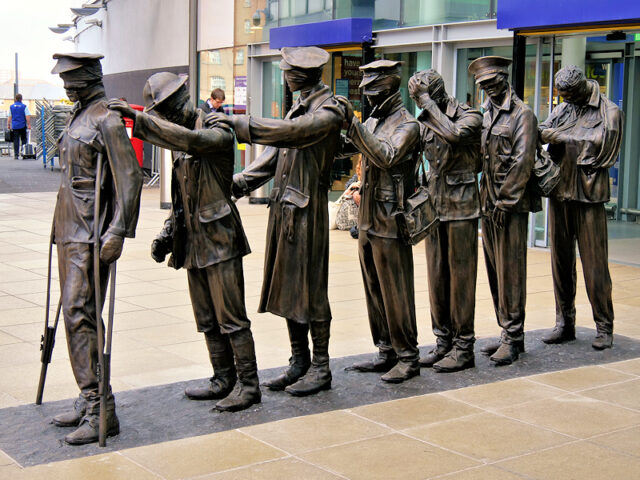
Victory Over Blindness
Discover Victory Over Blindness, the sculpture outside Manchester Piccadilly Station, honouring soldiers blinded during the First World War.
Read more
Artefact