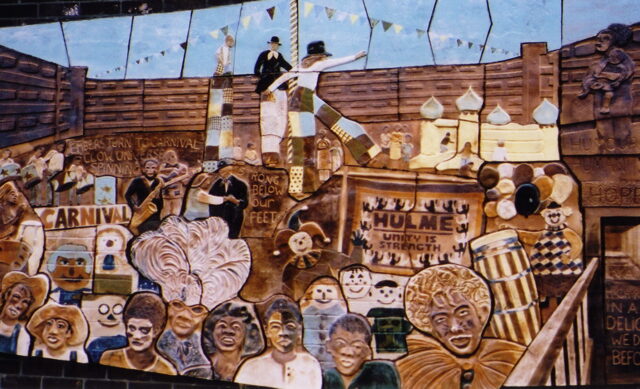
The New International Society and Club was established, with others, on Grafton Street, off Oxford Road, around 1946 by former boxer and activist Len Johnson. It created a welcoming space for African and Caribbean newcomers, political campaigners, trade unionists and local residents at a time when racial discrimination and the colour bar were widespread in Britain. The Society encouraged social gatherings, cultural exchange, political debate and organising against racism. One of its notable moments was helping to organise Paul Robeson’s visit to Manchester in 1949. Although it closed in 1950, its work helped lay the foundations for later Black community organisations and anti-racist campaigns in the city.
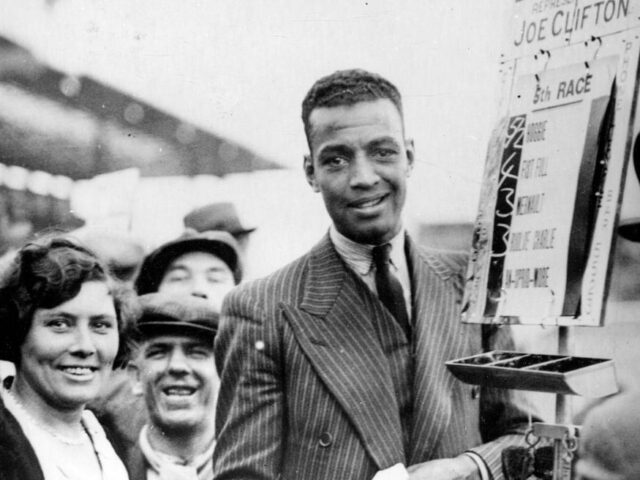
Len Johnson was one of Manchester’s most important Black historical figures. Born in 1902 to a Sierra Leonean father and Irish mother, he became an outstanding middleweight boxer but was denied the chance to fight for British titles because boxing rules required contestants to have “two white parents.” Known as Manchester’s “uncrowned champion,” he later devoted himself to politics and anti-racist activism. He joined the Communist Party in 1945, attended the 1945 Pan-African Congress in Manchester, stood as a council candidate in Moss Side, and co-founded the New International Society.
Johnson’s life linked sport, Pan-Africanism, workers’ rights, anti-racism and community organising. The New International Society’s legacy can be seen as an early influence on later institutions such as the West Indian Sports and Social Club, Abasindi and other organisations that gave Black Mancunians support, representation and a political voice.