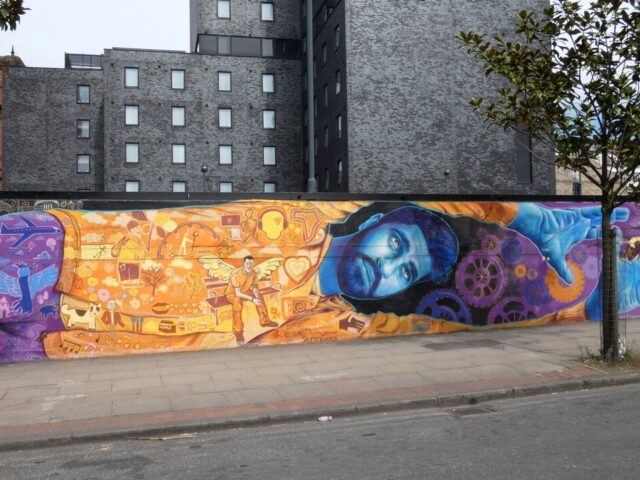
The Ducie Street Doodle was a huge mural made by Mancunians who had experienced homelessness. Stretching along a wall near Piccadilly Station, it showed a person flying from darkness towards light. The project grew from workshops at Mustard Tree, one of Manchester’s leading charities working against poverty, and gave its artists space to tell their own stories.
Artefact
Ducie Street Doodle
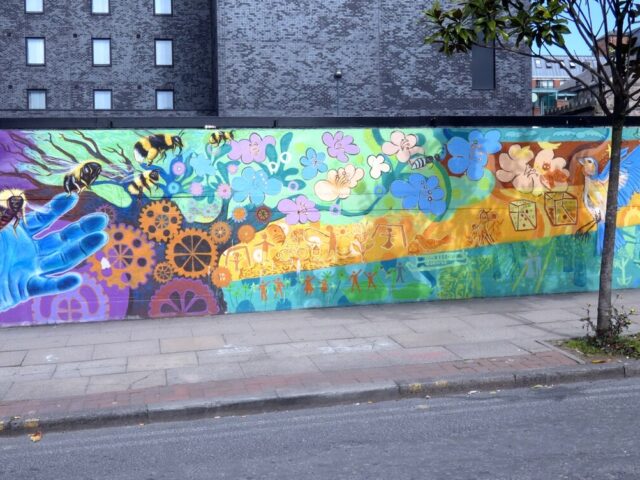
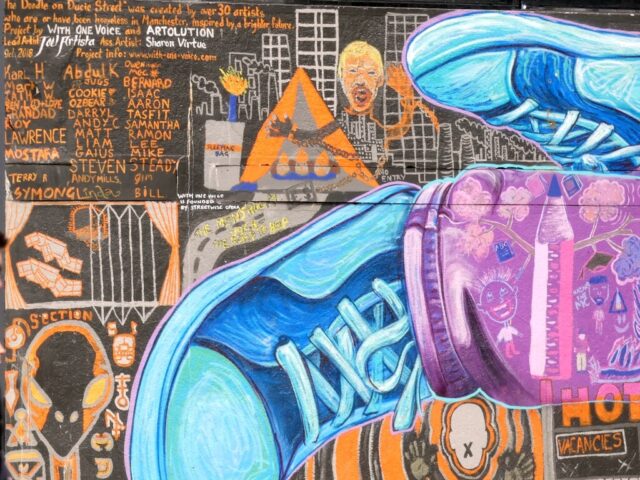
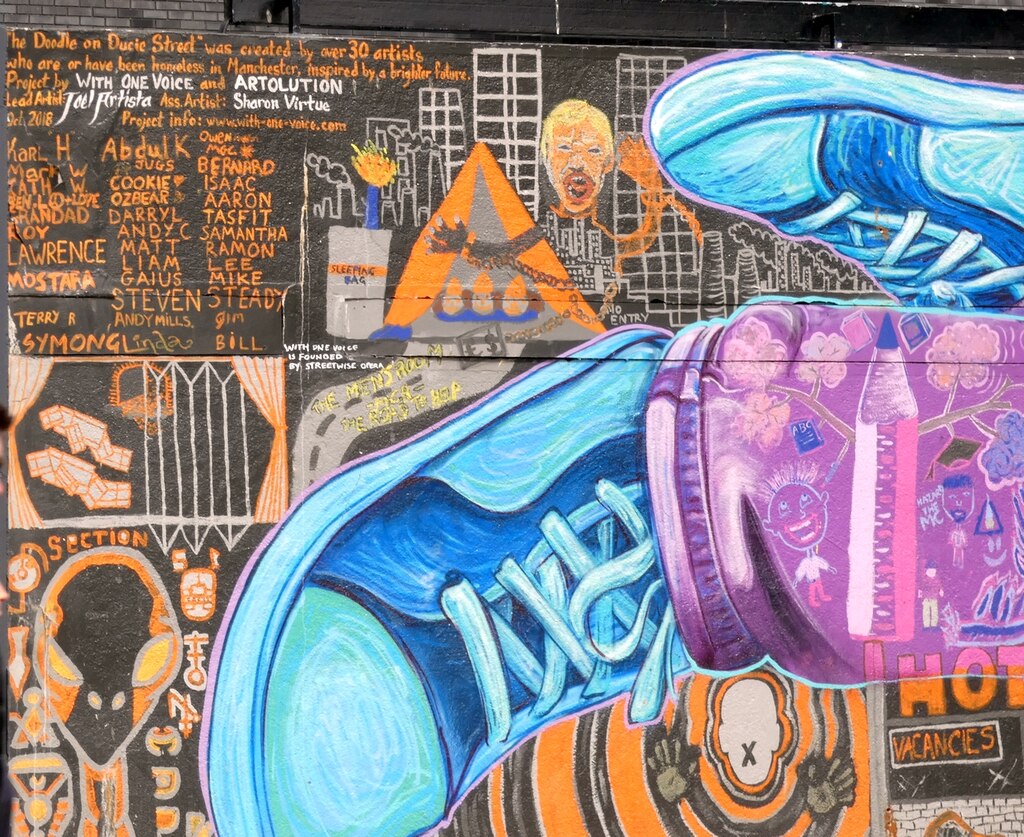
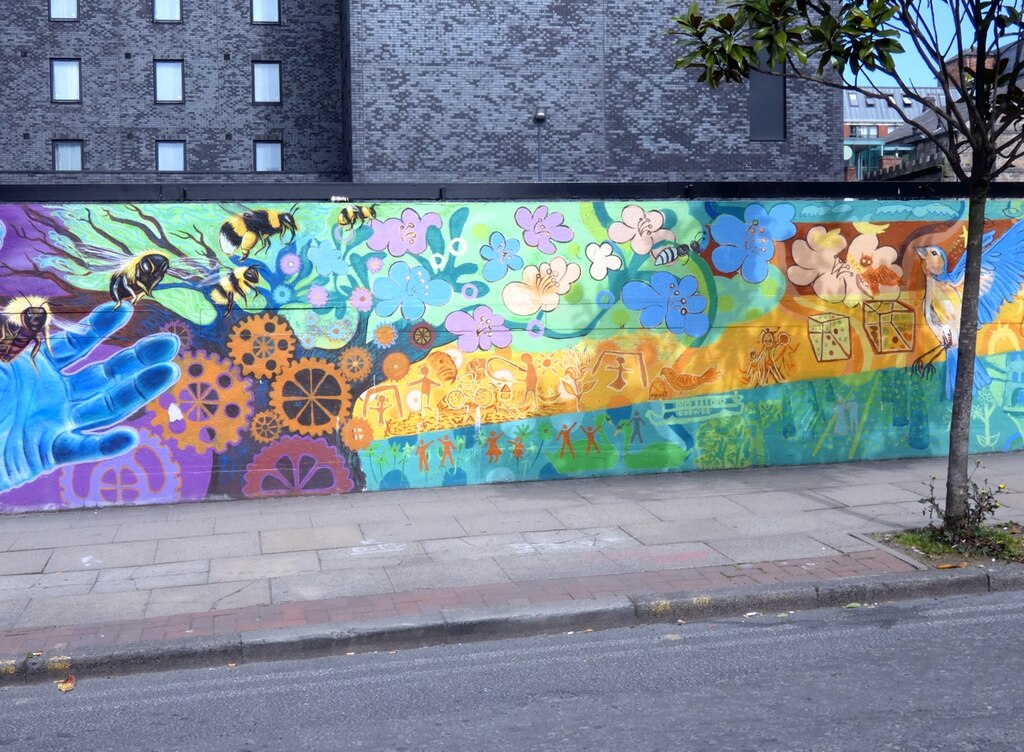
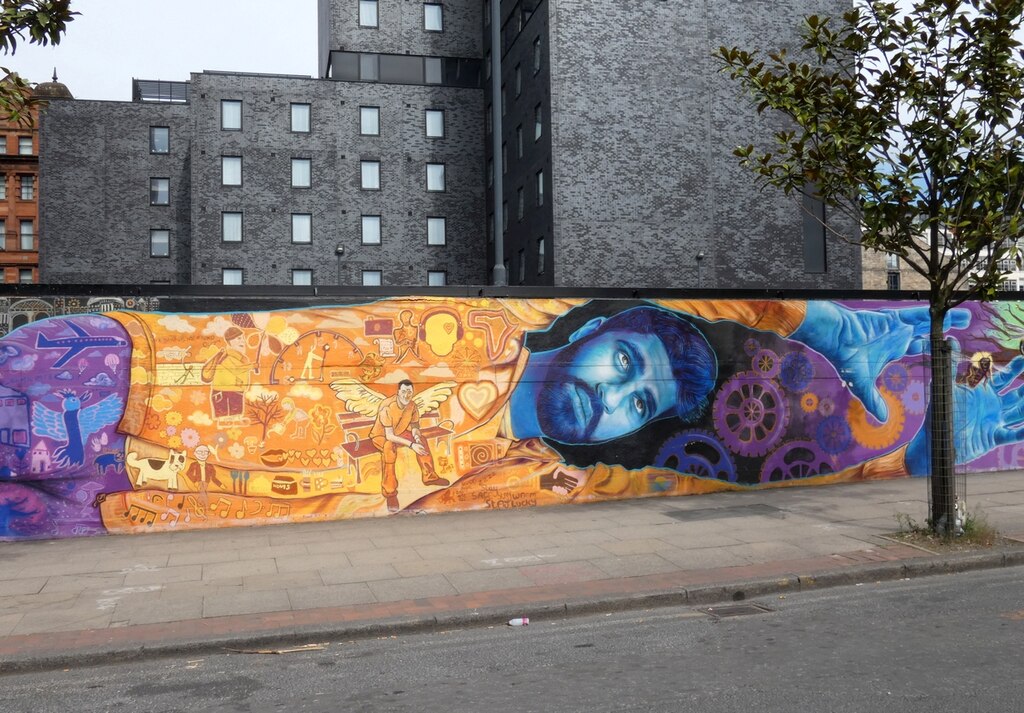
Around 30 people helped paint the Doodle. Some joined through Mustard Tree, the Booth Centre and other support organisations, while passers-by also took part. The mural took a week to complete, and each artist could use their own section freely. Many signed a panel beside the finished work. The named artists included Karl H, Mark W, Kath W, Ben L, Grandad Roy, Lawrence, Mostafa, Terry R, Symon G, Abdul K, Jugs, Cookie, Ozbear, Darryl, Andy C, Matt, Liam, Gaius, Steven, Andy Mills, Linda, Owen, MGC, Bernard, Isaac, Aaron, Tasfit, Samantha, Ramon, Lee, Mike, Steady, Jim and Bill.
Professional artists Joel Bergner and Sharon Virtue supported the group. Joel began with workshops at Mustard Tree and listened to what people wanted to express. The artists chose a positive theme that would challenge misunderstandings about homelessness, show their abilities and describe a journey towards a brighter future. Joel turned this into the outline of a person flying from shadow into light. He suggested a colour palette that would hold the image together, but within it people used pictures, poetry and favourite song lyrics in any way they chose.
Matt Peacock, now co-director of Arts and Homelessness International, coordinated a partnership that included Mustard Tree, the Booth Centre, Emmaus Mossley, Stockport Homes, Streetwise Opera and Manchester Museum. The idea grew from a city-wide summit in 2018 about how art and culture could help address homelessness. Matt explained that “people who are experiencing multiple issues need multiple solutions, including positive activity that heals, makes people grow in their sense of wellbeing and pride, and connects people to each other and society.”
Before painting began, the wall was repaired and covered with a neutral colour. Joel drew the flying figure, and several artists volunteered to have their face used for it. A name was picked from a hat. People then joined and left as they wished. They were at different points in their housing journeys, from sleeping rough and emergency accommodation to longer-term recovery. The atmosphere became festive, and the completed wall was full of hopeful messages that offered a different public story about homelessness.
Cookie, who had been homeless for two years before joining the Emmaus community in Mossley, cut the ribbon at the unveiling. Manchester Museum then hosted an exhibition connected with the project. The organisers wanted the relationships and confidence created during painting to continue afterwards. Matt said that “the day after was the most important part of it. We didn’t want the positive family atmosphere to be created then evaporate.”
The Doodle was eventually painted over with a new mural. It had never been promised as a permanent work: property owner Bruntwood originally gave the project a one-year licence. Its popularity helped it remain for much longer, and it was tagged only once. A member of the public even arrived at night with paint thinner to repair the damage. Many residents were upset when an advert connected with the Brit Awards replaced it, especially because thousands of people saw the wall when leaving Piccadilly Station. Street art is temporary, and a large photograph records the Doodle, but its most important legacy may be the confidence, friendships and public voice created among the people who painted it.
– mural artist Cookie, speaking at the Doodle’s unveiling ceremony“Thank you to everybody who’s on the wall, in the wall and part of the wall. We’re all part of Manchester – the greatest city on earth – and this has been a massive team effort to make it happen.”
– Joel Bergner (Artolution), speaking during the Doodle’s creation in 2018“The art is a way to really show in a positive light people’s talents, what people have to say. It’s really something that allows the participants to tell their own story.”
Read about the impact of the Doodle on one of its artists here, or dig into the wider story behind the project.
How does Manchester use street art to tell alternative stories? Keep exploring This Is Us to find out, or get in touch to tell us about your favourites!
Related
Artefact
•Northern Quarter
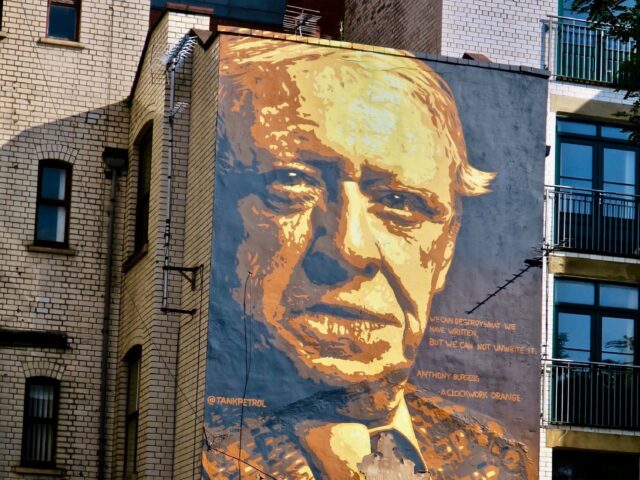
Anthony Burgess mural
Explore the Anthony Burgess mural near Manchester Craft and Design Centre, celebrating the Manchester-born writer behind A Clockwork Orange.
Read more
Artefact
Artefact
•Ancoats
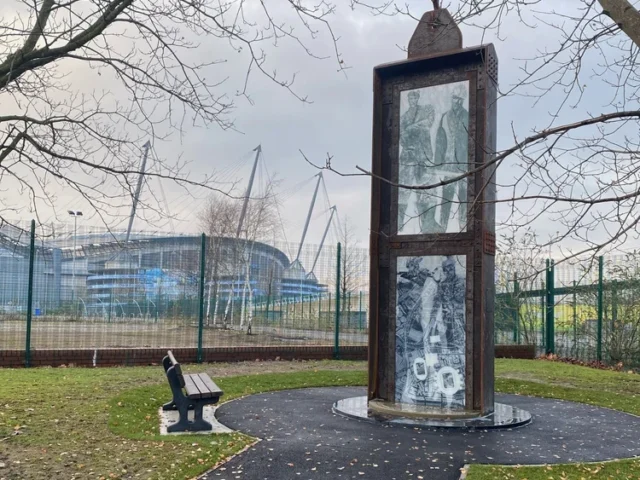
Bradford Pit Memorial
Learn about the Bradford Pit Memorial at the Etihad Stadium, honouring the miners and working-class history beneath Manchester’s famous football ground.
Read more
Artefact
Artefact
•Collyhurst
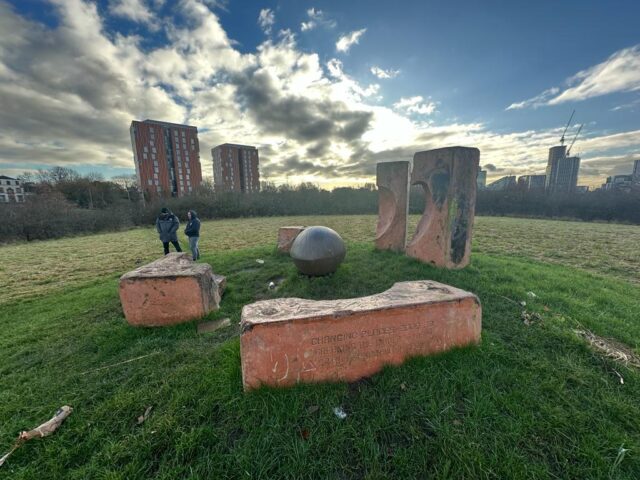
Breaking the Mould
Discover Andrew McKeown’s Breaking the Mould, one of twenty-one millennium sculptures marking the transformation of industrial land into public parks.
Read more
Artefact
Artefact
•Piccadilly
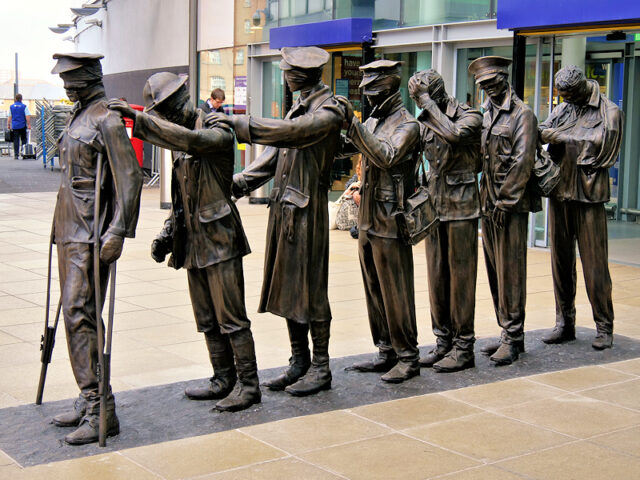
Victory Over Blindness
Discover Victory Over Blindness, the sculpture outside Manchester Piccadilly Station, honouring soldiers blinded during the First World War.
Read more
Artefact

Artefact
•Piccadilly
Placemaking Piccadilly: Community Voices in the City Centre
Explore the story of Placemaking Piccadilly, a community arts project bringing local voices and lived experience into conversations about Piccadilly Gardens.
Read more
Artefact