The simple plaque marks one of the most important events in Manchester’s Black history. The Fifth Pan-African Congress challenged racism, promoted decolonisation and helped prepare the way for independence in several African nations. It was held in October 1945 at Chorlton-on-Medlock Town Hall, a building that is now part of Manchester Metropolitan University.
Artefact
Site of the Fifth Pan-African Congress, held in October 1945
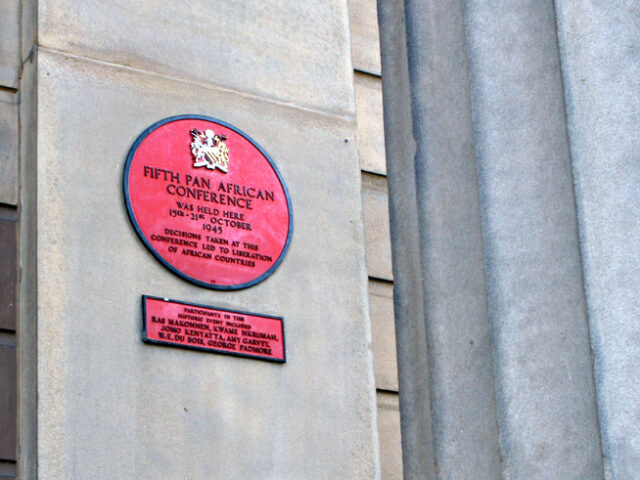
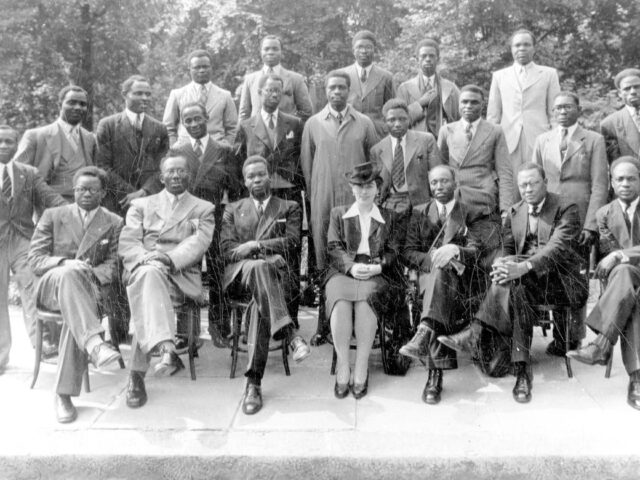
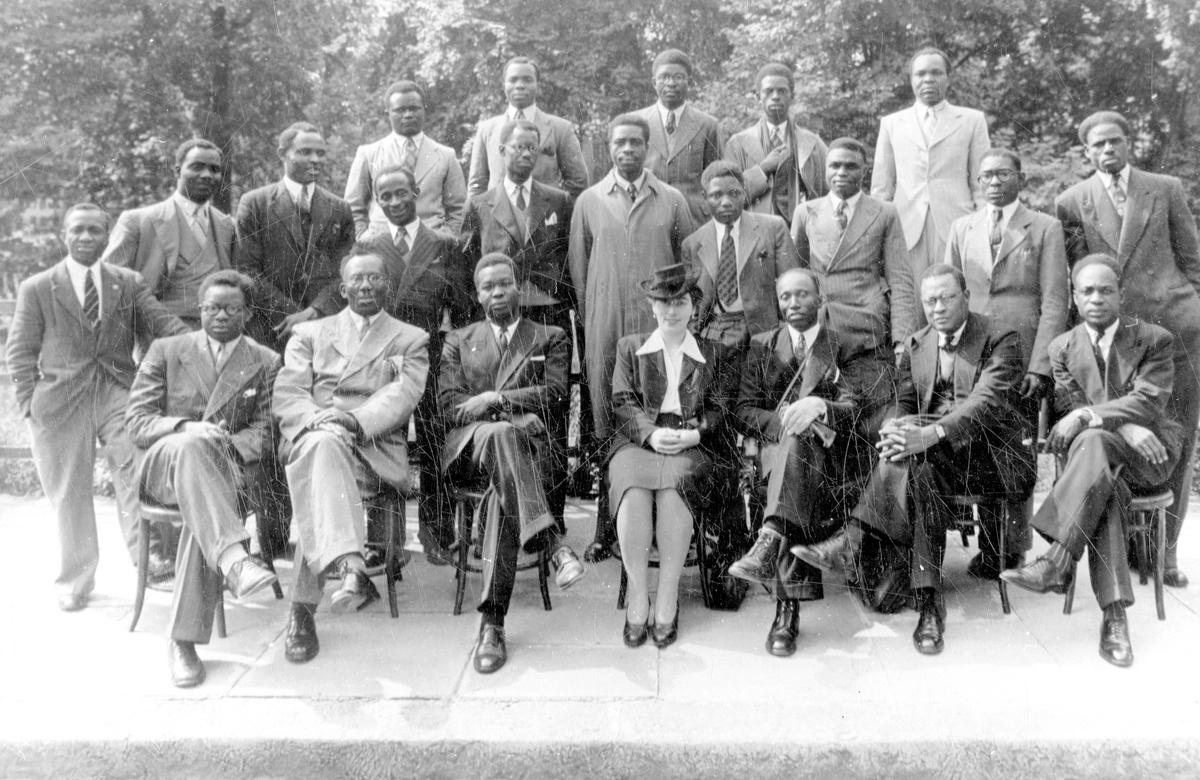
The Pan-African movement emerged during the 1800s as European powers colonised Africa. Black thinkers and activists organised a series of international congresses to discuss how African people could free themselves from imperial control. Meetings took place in European cities, but delegates travelled from around the world. Their discussions helped inspire several people who later led independence movements in their home countries.
Black migrants often found Manchester more welcoming than other British cities, but prejudice remained widespread. ‘Colour bars’ deliberately kept Black people out of venues, jobs and other opportunities. At the same time, Manchester’s cotton workers had supported Black rights during the American Civil War. By 1945, the city had energetic Black activists, students and entrepreneurs who created multiracial spaces and challenged discrimination. This history made Manchester a strong choice for a British Pan-African Congress.
Around 200 people attended from Monday 15 to Sunday 21 October 1945. They included African students studying in Britain, freedom fighters who had travelled from Africa, and representatives of trade unions and workers’ groups. The week covered racial discrimination, education, children’s welfare, working conditions, rights and independence. Speakers included Amy Ashwood Garvey, co-founder of the newspaper Negro World, journalist George Padmoreand sociologist William Du Bois. Manchester’s Lord Mayor, William Jackson, formally welcomed the delegates.
Earlier congresses, including the first meeting in Paris in 1919, had been mainly middle class. Some delegates had distanced themselves from activists they considered too radical or working class. The Manchester meeting had a different character. The city’s politics had long been shaped by industrialisation and campaigns for workers’ rights. Many Pan-Africanists believed socialism could help break the economic systems that gave empires power over colonies. Local Communists also fought racism, including through campaigns led by Manchester boxer Len Johnson, although they did not always agree with the Pan-African Federation.
The congress was partly funded by Dr T. Ras Makonnen, an entrepreneur who had studied history at Manchester University. Makonnen, known to friends as “Mak”, ran restaurants, a nightclub and a bookshop that welcomed customers of different races. Their profits helped pay for the meeting. His political contacts also helped persuade Conservative councillor Richard Harper to make the Town Hall available. Makonnen worked with friends including Salford doctor Peter Milliard and restaurant owner Alfred Gaisie.
After the congress, money from their businesses was sent to Africa to support freedom campaigns. Three delegates went on to lead their nations towards independence: Hastings Banda in Malawi, Jomo Kenyatta in Kenya and Kwame Nkrumah in Ghana. Their later careers were different, but their presence shows why the Manchester congress became a landmark in the history of African liberation.
Early Pan-African congresses hoped peaceful pressure would persuade governments to end colonial rule. By 1945, broken promises had left many younger activists doubtful, and some believed armed revolution might be necessary. Even so, the Fifth Congress supported peaceful mass action and presented Gandhi’s non-violent campaigns as an example, with violence treated as a last resort. Nkrumah argued for complete independence and would not rule out force. He later used politics and protest to lead Ghana to independence from Britain in 1957. His government became repressive and he was removed in a coup, but Ghana was the first Black African nation to free itself from British rule, and Nkrumah remains an important independence leader.
– T. Ras Makonnen, key Congress organiser“We were remaking history by coming to stir up that other side of Manchester, its fierce anti-slavery streak”
– Raz Finni, local resident who attended the Congress“I didn’t know what was going on behind the scene but I know as a result of that Congress many African nations…countries…today enjoy their own independence. I believe that.”
– resolution 3a, Fifth Pan-African Congress“Alien rule has not improved education, health or the nutrition of the West African peoples but on the contrary tolerates mass illiteracy, ill-health, malnutrition, prostitution, and many other social evils”
– Jomo Kenyatta, first Prime Minister of Kenya“The Congress was a landmark in the history of African people’s struggle for unity and freedom”
Read George Padmore’s documentation of the Congress Resolutions. Listen to Alfred Gaisie, who ran restaurants with Dr Makonnen, talk about the Congress and its aftermath. See photos of the Congress in this excellent blog post. Learn how Black boxer Len Johnson, born in East Manchester in 1902, campaigned against ‘colour bars’ in his home city. Dig deeper into the story of the Manchester Congress with The 1945 Manchester Pan-African Congress revisited by Hakim Adi and Marika Sherwood, published 1995 by New Beacon Books and free to borrow from Manchester Library.
Related
Story
MADE Manchester: Young People Exploring Welcome, Identity, and Belonging in Manchester
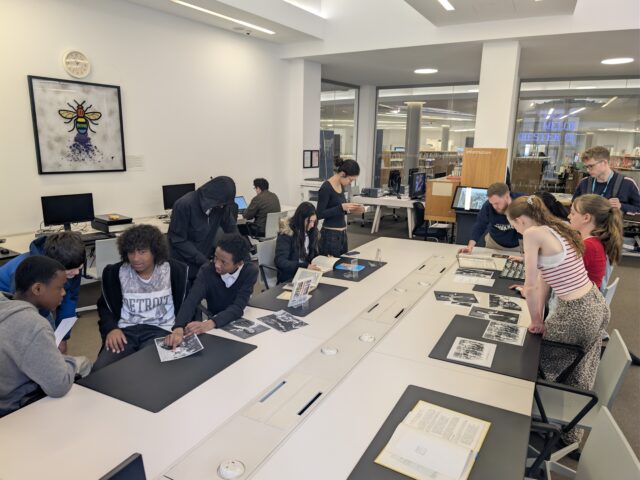
What does it really mean to feel welcome in Manchester? Year 9 students from Chorlton High School explored this question through history, poetry and spoken word, working with Manchester Histories, MADE and poet Reece Williams.
Read more
Story

Artefact
•Moss Side
Manchester Sickle Cell and Thalassaemia Centre
Learn about the UK’s first NHS community-based sickle cell centre and its important place in Manchester’s healthcare and Black history.
Read more
Artefact
Artefact
•Moss Side
The Ducie Mansions
Explore how Ducie Mansions and Denmark Road became an important home, meeting place and shopping area for Manchester’s African and Caribbean communities.
Read more
Artefact
Artefact
•Hulme
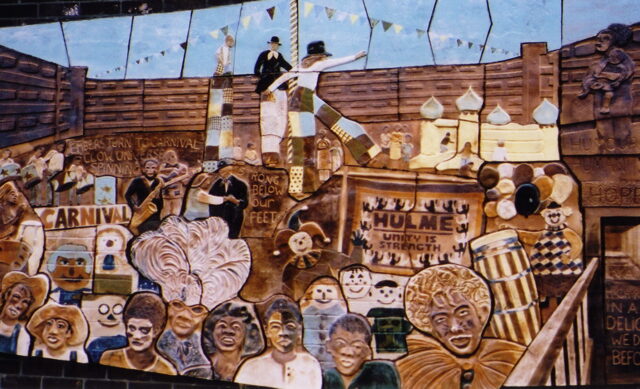
Hulme Mural
Learn about the Hulme Urban Potters, a community art group whose collaborative ceramic mural reflected creativity, regeneration and change in Hulme.
Read more
Artefact
Artefact
•Withington
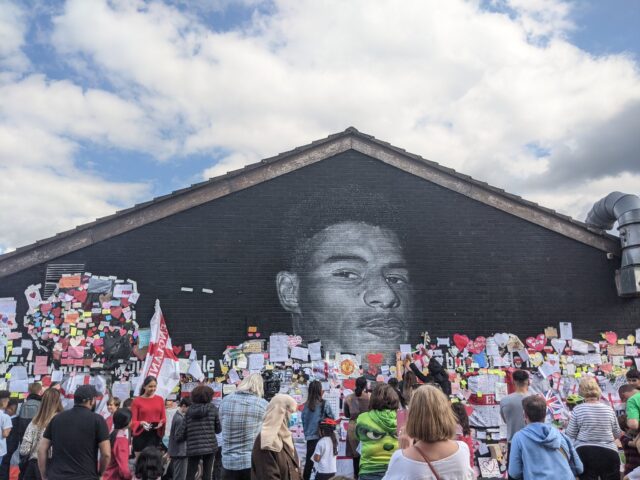
Marcus Rashford Wall of Hope
Explore the Marcus Rashford Wall of Hope in Withington, Manchester, a mural celebrating Rashford’s campaign against child food poverty and the community’s inspiring response to racism, solidarity and collective action.
Read more
Artefact
Artefact
•Moss Side
Kath Locke Centre
Read about the life and activism of Kath Locke and the lasting importance of the Kath Locke Centre to Manchester’s African-Caribbean community.
Read more
Artefact
Artefact
•Clayton
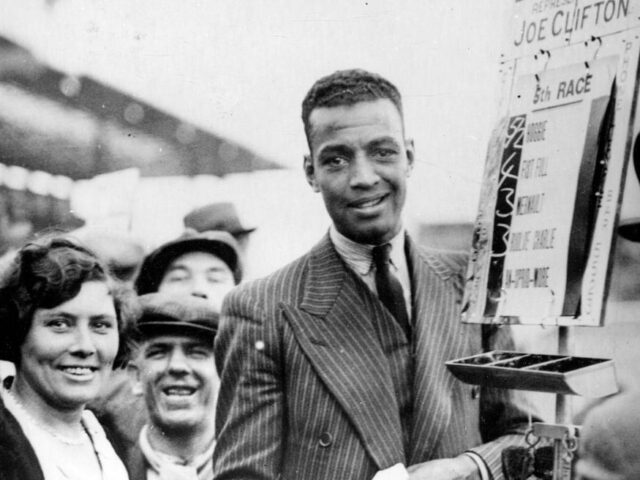
Len Johnson: Boxer, Activist and Manchester Pioneer
Discover the story of Len Johnson, Manchester’s “uncrowned champion”: a world-class boxer, anti-racist campaigner and community activist.
Read more
Artefact